
Running a commercial fleet across Palm Beach County requires balancing tight delivery schedules with strict operating budgets. While unexpected mechanical repairs always challenge operating margins, the South Florida climate acts as a quiet catalyst that speeds up mechanical degradation long before the dashboard warning lights come on.
Between long idle times along the busy West Palm Beach distribution corridors and repetitive stop-and-go driving across commercial delivery routes throughout Palm Beach Gardens, severe ambient heat places constant demands on heavy-duty equipment. Understanding how high temperatures wear down critical assemblies helps fleet managers preserve vehicle longevity and protect bottom-line profits.
Thermal Breakdown and Engine Lubrication
Engine oil serves as both a lubricant and an internal heat transfer medium. When ambient summer temperatures climb into the nineties and asphalt temps push past 130 degrees, motor oil breaks down at an accelerated rate. High heat thins the lubricant, reducing its protective film strength across bearings, camshafts, and cylinder walls.
For delivery vehicles that spend hours idling in tight loading bays or maneuvering through light-industrial parks in Lake Park, thermal stress leads to sludge formation and increased friction. Staying proactive with a regular commercial truck oil change schedule ensures engines run clean, maintain proper viscosity, and avoid costly bottom-end repairs.
Cooling Systems and Electrical Strain
Cooling components bear the brunt of local weather conditions. Radiator hoses become brittle, plastic reservoir tanks can develop hairline fractures, and water pumps operate under continuous load. Even a minor leak or low coolant level can cause sudden cylinder head distortion or transmission overheating.
At the same time, excessive heat significantly reduces battery life by accelerating internal plate corrosion and evaporating electrolyte fluid. Electrical components must work double duty to power heavy cooling fans and cabin air conditioning systems.
Brake Dynamics and Road Surface Stress
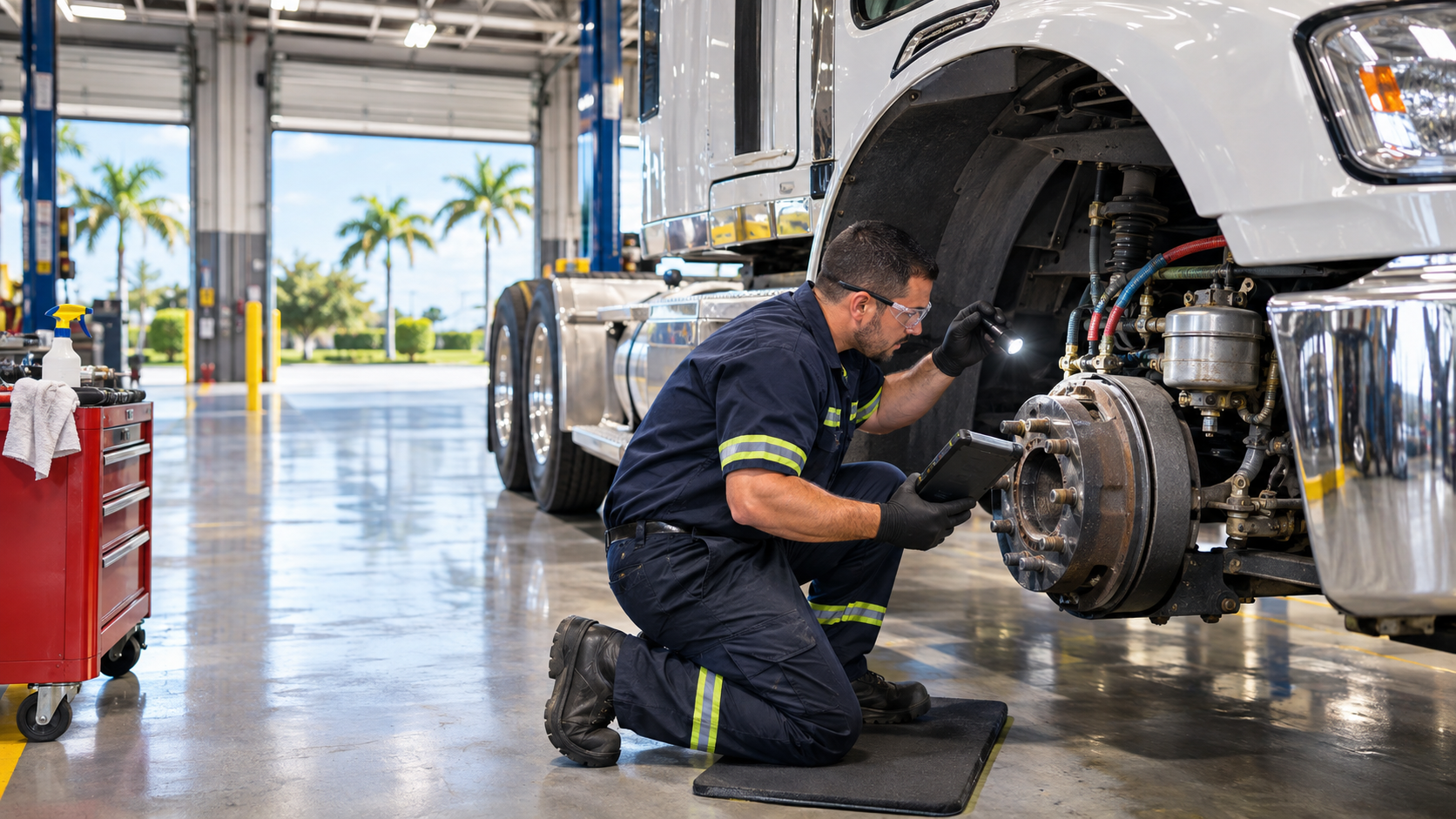
Stop-and-start traffic on baking pavement generates intense thermal buildup inside drum and disc brake assemblies. Constant heat cycles can glaze brake pads, warp rotors, and break down hydraulic fluid. According to safety guidance from the Federal Motor Carrier Safety Administration (FMCSA), brake-related issues consistently account for a major share of commercial vehicle inspection violations.
Heat also causes tire air pressures to fluctuate dramatically. Under-inflated or over-inflated tires wearing across scorching road surfaces degrade tread life quickly, creating avoidable roadside downtime.
Proactive Fleet Care in Our Community
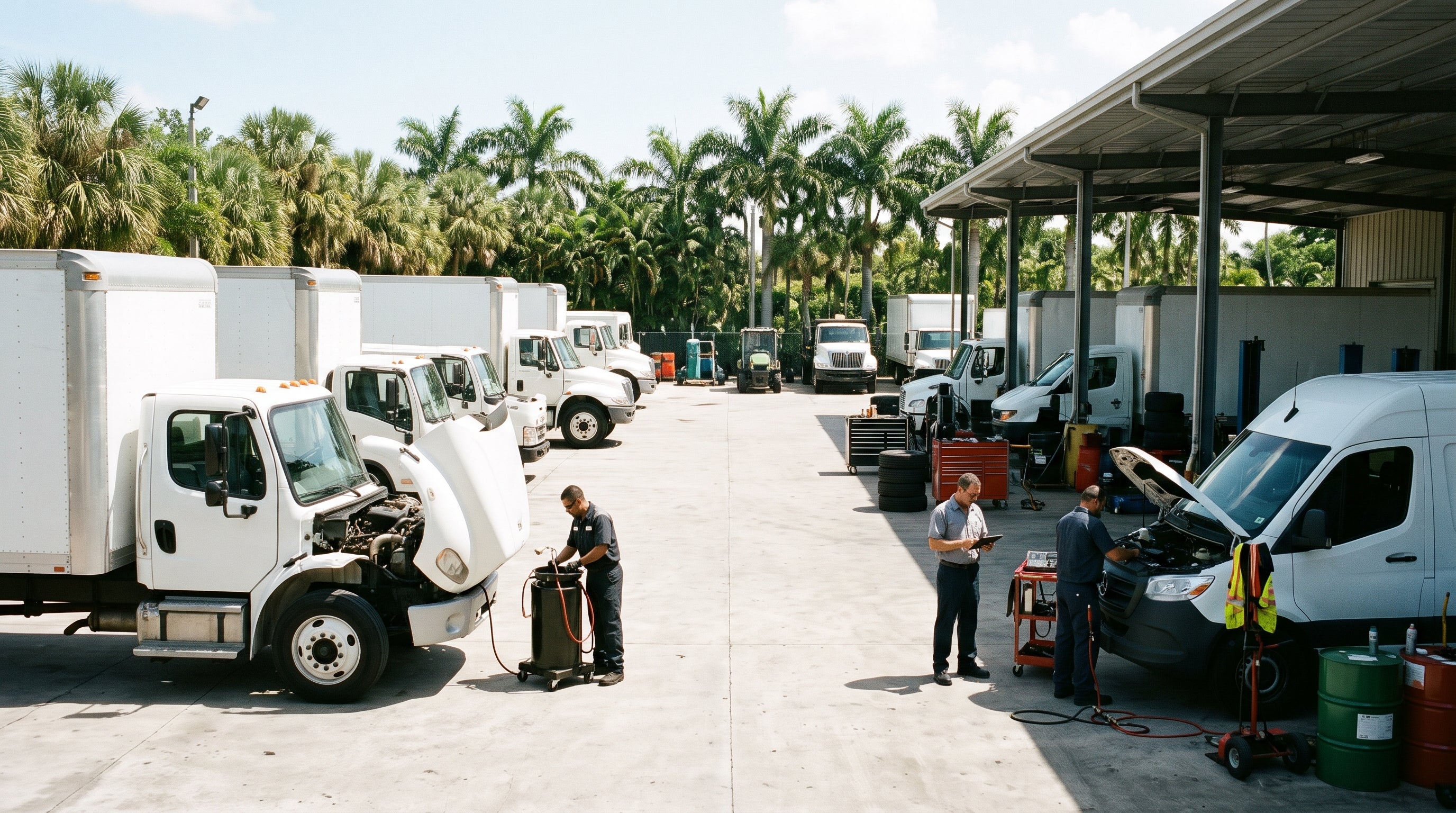
Preventive care is consistently less expensive than unscheduled downtime. Enrolling your trucks in structured fleet maintenance programs allows our team at Al Packer Commercial Fleet Services to catch thermal wear, fluid breakdown, and tire irregularities early. Whether you are arranging scheduled fleet service or looking for a trusted partner to handle your routine maintenance intervals, our certified technicians are here to support your operation.
If you would like to discuss ways to keep your delivery vans and work trucks running smoothly this season, feel free to connect with our service advisors whenever it suits your schedule.